An exploratory study on visual quality, realism and the evolving role of human creativity in marketing.
Generative AI has fundamentally changed how quickly visual marketing content can be produced. Images that once required photographers, designers, production teams and substantial budgets can now be generated within minutes.
But speed and efficiency are only part of the equation. Can AI-generated imagery actually compete with human-created marketing content in terms of perceived quality, realism and aesthetic appeal?
As part of my MSc Strategic Marketing at Imperial College Business School, I explored this question through an empirical research project comparing real-world marketing imagery with AI-generated alternatives.
The research
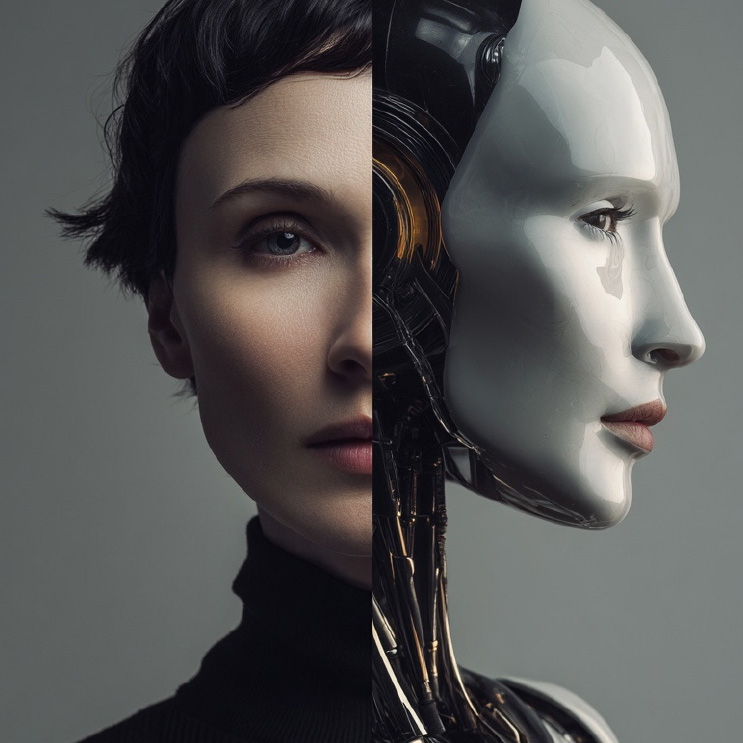
I collected marketing images from social media and developed comparable AI-generated visuals using tools including Midjourney and ChatGPT.
Three survey designs examined how participants evaluated the images across perceived quality, realism and aesthetic appeal. The main analysis drew on 37 responses across two counterbalanced survey versions, supported by an exploratory paired-comparison study.
What I found
AI-generated images achieved comparable, and in several comparisons higher, ratings than human-created imagery.
However, the most interesting finding was not simply which images performed better. It was how strongly the usefulness of AI depends on context.
In visually driven, mobile-first environments, generative AI can produce convincing marketing content with remarkable speed and flexibility. In technically demanding applications, where structural accuracy, product integrity and consistency are essential, its limitations become much more apparent.
The results also suggest a broader shift in creative work: as AI takes on more of the production process, human contribution increasingly moves towards creative direction, selection, evaluation and quality assurance.
These findings are exploratory. The sample was relatively small, and the AI-generated images were carefully selected and refined, potentially favouring their perceived performance.
From production to creative direction
For me, the implications extend beyond image generation.
The question is not whether AI will simply replace human creativity. It is how creative processes, professional responsibilities and marketing organisations will evolve as increasingly capable tools become part of everyday work.
Understanding where AI adds value and where human expertise remains indispensable. This will be essential to using these technologies effectively.
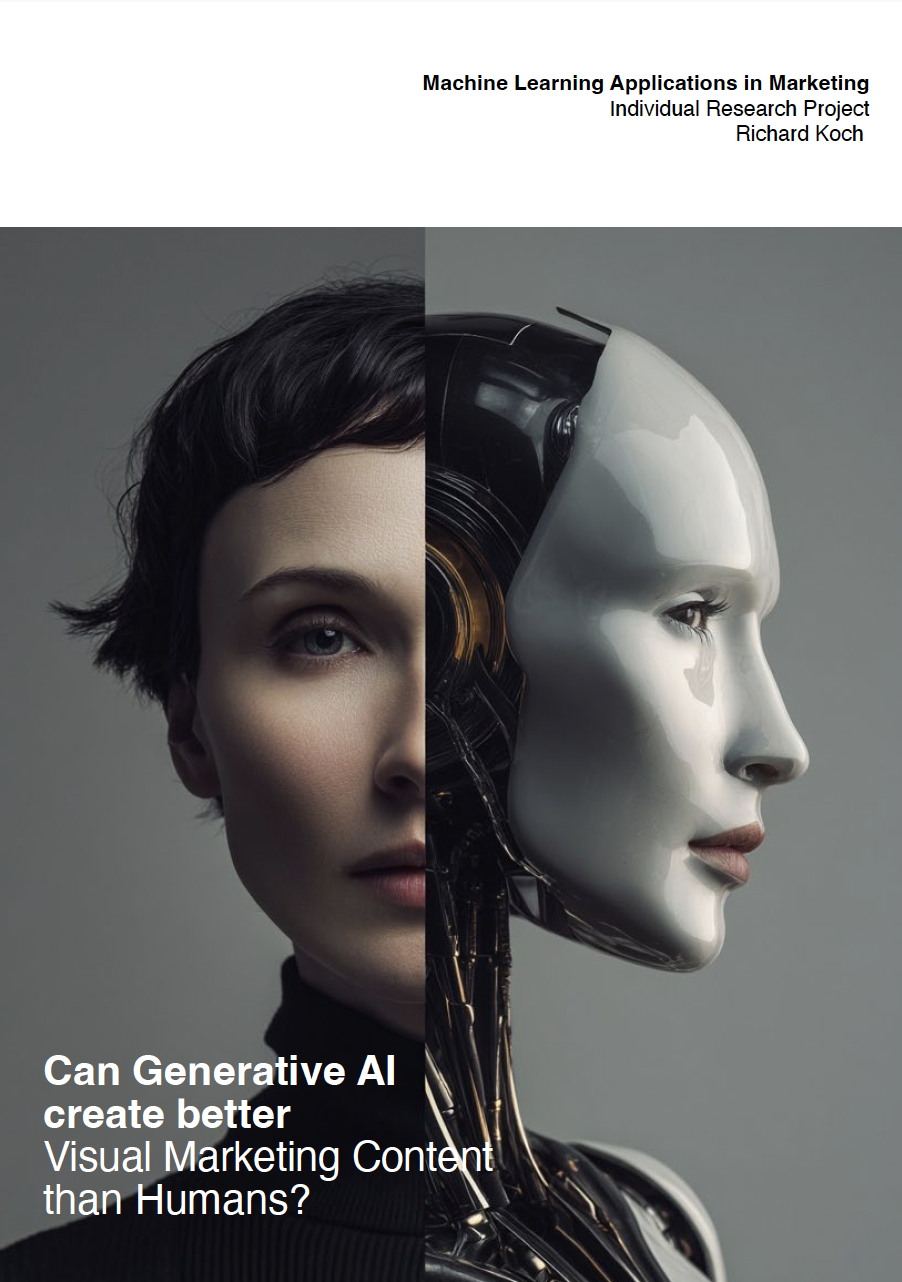
Read the research
Can Generative AI Create Better Visual Marketing Content Than Humans?
Individual Research Project
MSc Strategic Marketing
Imperial College Business School
2026
Publication note:
This paper was originally prepared as an individual academic research project. For this public edition, selected appendices containing third-party marketing imagery, visual comparisons and supporting research materials have been omitted to respect reproduction rights. The research methodology, analysis, findings and conclusions are retained. The original academic submission, including supplementary materials, may be requested for research or professional review. Any sharing of third-party imagery remains subject to applicable permissions. The research represents the author’s independent work and is not an official Imperial College publication.
Cover illustration generated with Midjourney (2026).